 Italian
  Russian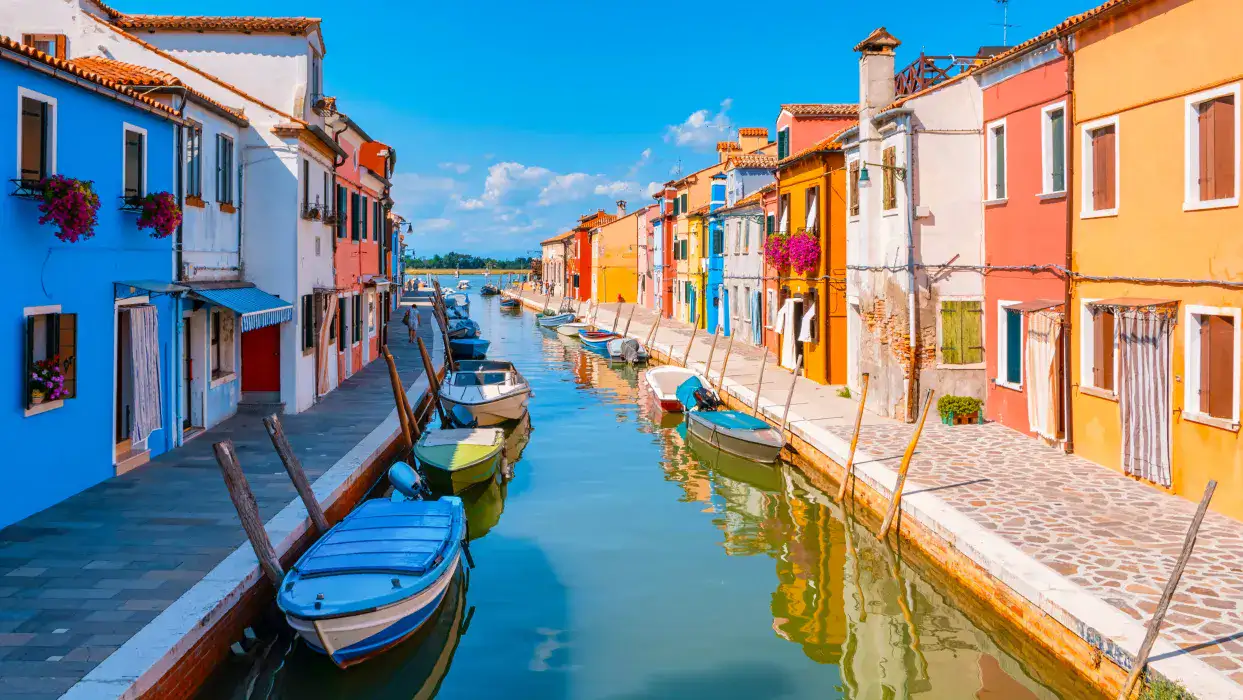
Private Tour of Murano and Burano: Art, Colors and Traditions of the Lagoon
- 7 August 2026
Visiting Murano and Burano means leaving the monumental heart of Venice behind for a few hours to discover two of the most distinctive sides of the lagoon. The first has been linked to the art of glassmaking for centuries, while the second is known for its colorful façades, lace-making tradition and identity deeply connected to island life.
Reaching them on a private boat tour makes the journey itself part of the experience. Sailing across the lagoon offers a different perspective on Venice and its surroundings, while allowing the day to be organized more smoothly and giving each stop the time it deserves.
Murano and Burano: two islands, two different identities
Murano and Burano are often visited together, but treating them simply as two stops on the same itinerary means overlooking much of what makes each island unique.
Murano tells a story of furnaces, master glassmakers and techniques passed down through generations. Burano welcomes visitors with an entirely different landscape, characterized by small brightly colored houses, canals, bridges and craft traditions that remain deeply rooted in the island's identity.
An itinerary that includes both therefore offers the opportunity to discover two different sides of the Venetian Lagoon, united by histories that developed in close relationship with the water.
Murano and the centuries-old tradition of Venetian glass
Located just a short distance from Venice's historic center, Murano is known around the world for its artisanal glass production.
The relationship between the island and this craft dates back at least to 1291, when the Republic of Venice ordered the city's glass furnaces to be moved to Murano, partly to reduce the risk of fires in the historic center.
From that moment, the island gradually became the heart of Venetian glassmaking. Even today, entering a furnace offers the opportunity to observe master glassmakers at work and understand the expertise required to transform glowing molten glass into objects, sculptures and decorative works.
During a private tour, the boat journey can be combined with a visit dedicated to this tradition, turning the experience into much more than a simple walk around the island.
Murano beyond the glass furnaces
Glass is inevitably the main attraction, but Murano also preserves a historical and architectural heritage that deserves to be explored carefully.
Walking along its canals reveals historic buildings, workshops and traces of the island's past. Among its most important cultural landmarks are the Glass Museum, which traces the evolution of glass production through the centuries, and the Basilica of Santi Maria e Donato, one of the finest examples of Romanesque-Byzantine architecture in the lagoon.
By combining craftsmanship, history and everyday island life, Murano reveals a much more complex personality than its famous image as the island of glass furnaces alone might suggest.
Burano: colors, canals and lagoon life
Continuing towards the northern lagoon, the scenery changes completely.
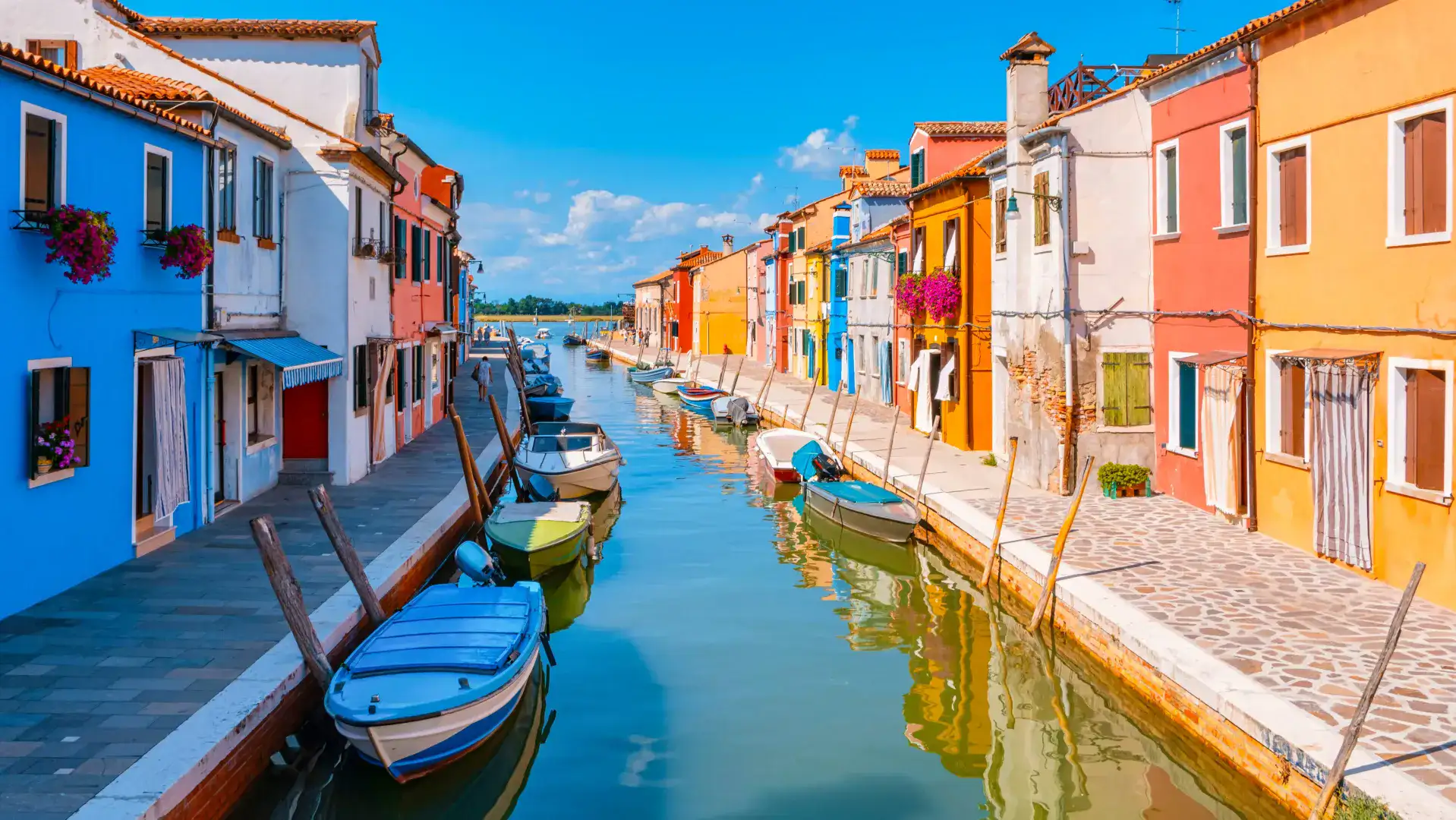
Burano is immediately recognizable for the colorful façades of the houses lining its canals. Reds, blues, yellows, greens and pinks create constantly changing views as visitors cross bridges and wander along the island's narrow streets.
According to tradition, the bright colors helped local fishermen recognize their homes on days when thick fog covered the lagoon. Whatever the precise origins of this custom, the result has become one of the island's most distinctive features.
The best way to discover Burano is therefore to allow time for walking, observing the details and occasionally moving away from its most photographed viewpoints.
Burano's lace-making tradition
Alongside its colors, one of the most important expressions of Burano's culture is its traditional needle lace.
This craft, developed over the centuries and once celebrated in European courts, requires great precision and extraordinary patience. The Lace Museum, overlooking the central Piazza Baldassarre Galuppi, preserves works and historical evidence that help visitors understand the evolution of this tradition.
The nearby Church of San Martino is also worth seeing, particularly for its characteristic leaning bell tower that dominates the island's skyline.
Visiting Burano therefore means going beyond the immediate visual impact of its colorful houses and discovering a community whose artisanal and maritime traditions remain clearly recognizable.
Burano can also be discovered through its cuisine
The culture of the island is inevitably reflected in its food.
One of its best-known specialties is the bussolà, the traditional Burano biscuit originally prepared as a food that fishermen could easily preserve during long periods at sea.
Local cuisine also maintains a close relationship with what the lagoon provides. One example is risotto di gò, prepared using a small fish native to the lagoon waters.
Including a gastronomic stop during the day can therefore become another way to experience the local area, particularly when the itinerary is not tied to a standardized schedule.
Why visit Murano and Burano on a private tour
Visiting several islands in a single day inevitably requires coordinating navigation, stops and sightseeing time.
A private tour of Murano and Burano makes it possible to organize these elements within one itinerary, preventing transfers from taking up most of the day.
A private boat also makes the journey more relaxed and provides time to observe the lagoon landscape along the way. Salt marshes, smaller islands, bell towers and the distant skyline of Venice accompany the route, revealing just how important the lagoon is to the identity of the city.
The advantage therefore lies not only in reaching Murano and Burano, but also in turning the journey between the islands into an integral part of the experience.
A day designed around what truly interests you
Not everyone visits Murano and Burano with the same expectations.
Some travelers want to explore glassmaking in greater depth, others want more time for photography, some are interested in local craftsmanship, while others simply prefer to stroll and observe everyday island life.
This is where a private itinerary offers its greatest value: the route can be organized around individual interests, available time and the type of experience desired, rather than following exactly the same sequence for every visitor.
Stops can also be managed more naturally, allowing more time for the experiences that prove most interesting during the visit.
Discovering the lagoon, not just two destinations
Murano and Burano may be the main destinations of the day, but the journey also provides an opportunity to understand something broader: the geography of the Venetian Lagoon.
As the boat gradually moves away from the historic center, the relationship between land and water changes, buildings become less dense and landscapes appear that are very different from the narrow streets of Venice.
The boat journey therefore becomes the thread connecting the different stages of the itinerary and provides a privileged perspective from which to understand the territory.
For travelers who have already visited St. Mark's Square, Rialto and Venice's main monuments, a day among the islands is also an opportunity to complete their stay by discovering a different side of the destination.
Private Murano and Burano tour with VIP Venice Tours
VIP Venice Tours organizes private boat excursions across the Venetian Lagoon, including itineraries dedicated to Murano and Burano.
Experiences can be personalized according to the time available and guests' interests, combining navigation, island visits and stops dedicated to local craftsmanship and traditions.
The aim is to experience Murano, Burano and the lagoon as one complete journey, with a private service and an itinerary organized around each guest's travel needs.
Discover the boat tours offered by VIP Venice Tours or contact us to arrange a private itinerary through Murano, Burano and the islands of the Venetian Lagoon.
Contact
