
 Italian
 Russian
Venice Grand Canal Tour: what to see among historic palaces and iconic bridges
- 20 October 2026
Explore the palaces, bridges and remarkable views along Venice's most famous waterway
The Grand Canal is Venice's main waterway and one of the places that best represents its history. Noble residences, monumental buildings and historic palaces line its banks, bearing witness to centuries of trade, wealth and architectural change.
It runs through the historic centre for approximately 3.8 kilometres in a distinctive S-shape, with four bridges connecting its two sides.
For visitors to Venice, travelling along the Grand Canal means seeing buildings from different periods in succession. The view from the water reveals their façades and historic entrances, offering an understanding of the city that is difficult to gain through walking alone.
The Grand Canal: Venice's history told from the water
During the centuries of the Venetian Republic, the Grand Canal was one of the main centres of the city's economic life. Goods, merchant vessels and people arriving from different territories travelled along this waterway.
Venice's most influential families built monumental residences along its banks to demonstrate their prestige. Their canal-side position provided direct access by water, one of the city's principal means of transportation.
Today, the Grand Canal still retains this distinctive identity. Alongside public water buses and water taxis, you will see gondolas and private boats, while Gothic, Renaissance and Baroque palaces succeed one another along the waterfront.
The architectural variety is one of the most fascinating aspects of the route: from a boat, it is possible to trace the city's transformations through the buildings that have witnessed its history.
The most important historic palaces on the Grand Canal
Many buildings of artistic and cultural significance stand along the Grand Canal. Some are now museums or public institutions, while others remain residential or have been adapted over the centuries.
Among the most notable are Ca' d'Oro, Ca' Pesaro, Ca' Rezzonico, Ca' Foscari and Palazzo Grassi, each reflecting a different period and architectural style.
Ca' d'Oro: a masterpiece of Venetian Gothic architecture
Located in the Cannaregio district, Ca' d'Oro is one of the most celebrated examples of Venetian Gothic architecture.
Its façade, with its arches, open galleries and intricate decoration, is among the most recognisable sights on the Grand Canal. The name recalls the gilding that once made the building's appearance even more elaborate.
The palace now houses the Galleria Giorgio Franchetti and is an important stop for anyone interested in Venice's artistic history.
Ca' Pesaro: the grandeur of Venetian Baroque
Ca' Pesaro is an imposing Baroque palace designed by Baldassare Longhena in the second half of the seventeenth century.
Its façade facing the Grand Canal stands out for its monumental scale, rhythm of columns and wealth of decorative elements.
Today it houses the International Gallery of Modern Art, making it an appealing destination for visitors who want to combine historic Venice with more recent art collections.
Ca' Rezzonico: Venice in the eighteenth century
Also associated with Baldassare Longhena's design work, Ca' Rezzonico is one of the most significant examples of Venice's Baroque period.
The palace features a monumental water entrance, a reminder that the Grand Canal was the main ceremonial approach to noble residences.
It now houses the Museum of Eighteenth-Century Venice, where visitors can explore the city's life, art and culture during one of its most important historical periods.
Ca' Foscari: Gothic elegance and the history of the Venetian Republic
Ca' Foscari occupies a particularly striking position on the broad bend in the Grand Canal known as the volta de canal.
The palace was built in the fifteenth century for Doge Francesco Foscari and is distinguished by its Gothic façade, with generous openings and refined architectural details.
Today it is home to Ca' Foscari University of Venice and offers an interesting example of how the city's historic heritage continues to serve contemporary purposes.
Palazzo Grassi: from noble residence to contemporary art
Palazzo Grassi was one of the last great noble palaces built on the Grand Canal before the fall of the Venetian Republic.
Constructed in the eighteenth century to a design by Giorgio Massari, it has a monumental façade reflecting the architectural tastes of its time.
It is now one of Venice's leading exhibition venues for contemporary art, creating a link between the history of the canal-side palaces and the city's present-day cultural life.
The four bridges over the Grand Canal
Four bridges cross the Grand Canal: Rialto, Accademia, Scalzi and Constitution. Each has its own architectural character and connects important areas of the historic centre.
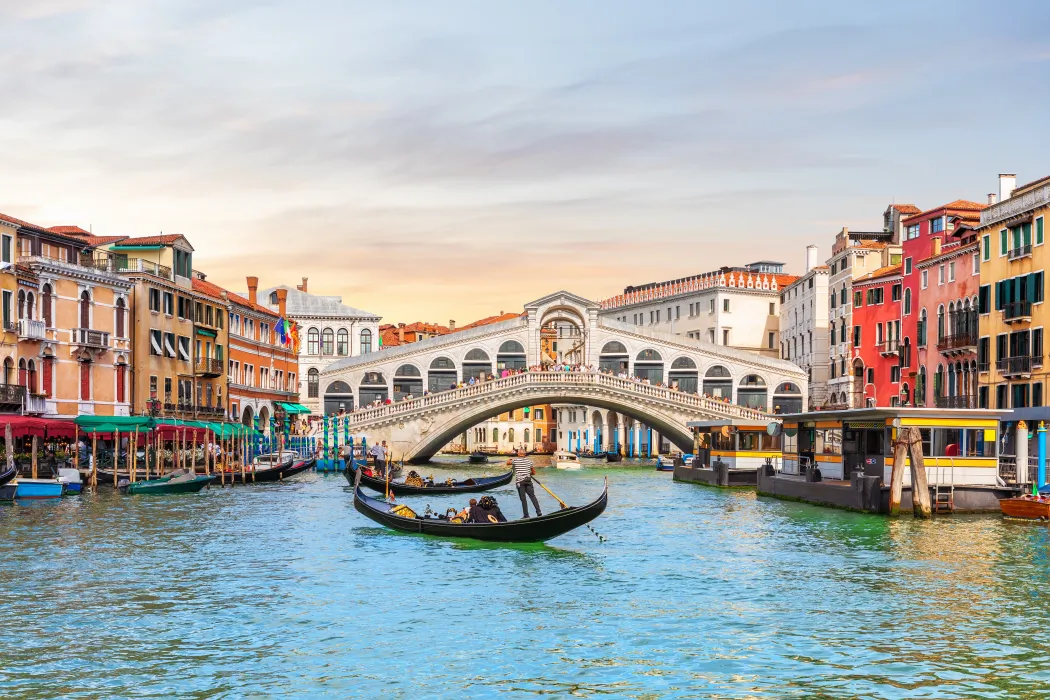
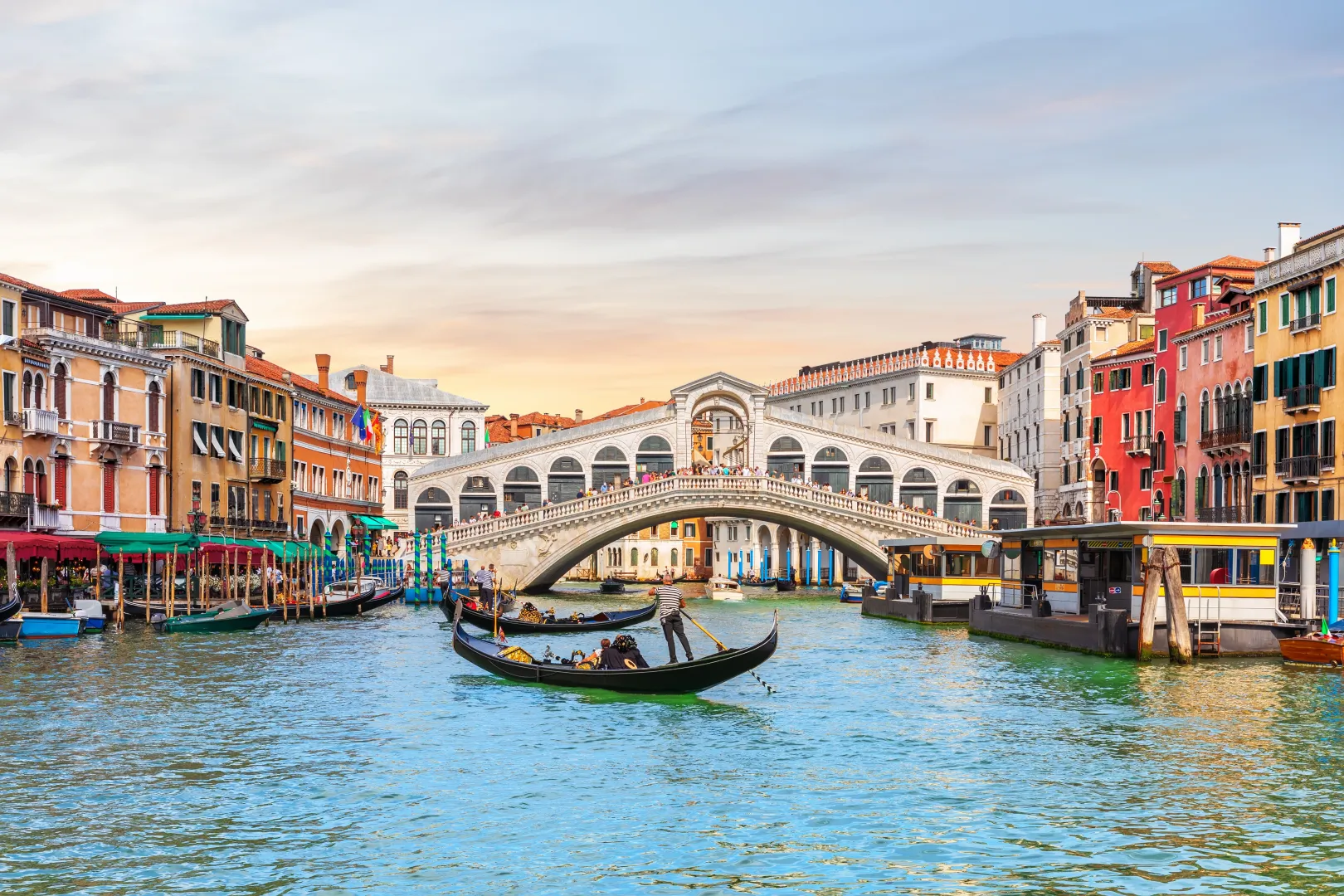
Rialto Bridge is the oldest and most famous. The present stone structure, completed in the late sixteenth century, stands in an area historically associated with trade and the city's market. It is one of Venice's most photographed landmarks and one of the canal's best-known viewpoints.
Accademia Bridge connects the San Marco and Dorsoduro areas. Its wooden structure provides a particularly beautiful view towards the Basilica della Salute and the southern stretch of the Grand Canal.
Scalzi Bridge, close to Venezia Santa Lucia railway station, is one of the main pedestrian crossings for travellers arriving in Venice by train.
Constitution Bridge, designed by Santiago Calatrava and opened in 2008, is the most recent. It links the station area to Piazzale Roma and introduces a contemporary architectural language into Venice's historic landscape.
Seeing these bridges from the water makes their shapes and relationship with the surrounding buildings easier to appreciate.
Exploring the Grand Canal: on foot, by vaporetto or by private boat
There are several ways to discover the Grand Canal, each offering a different experience.
Walking around Venice, visitors can reach a number of viewpoints, particularly from the bridges and canal-side paths known as fondamenta. There is, however, no continuous promenade along both banks: many stretches are occupied by buildings and private properties extending directly to the water.
The vaporetto, Venice's public water bus, allows visitors to travel along the Grand Canal and admire many buildings on the way.
A private boat tour, by contrast, allows you to dedicate the journey to discovering the cityscape rather than using the route primarily for transportation.
The best option depends on your interests and available time. Visitors who want to pay closer attention to the historic architecture may wish to include a boat tour in Venice in their stay.
The Grand Canal from the water: a privileged perspective on Venetian architecture
Viewing the Grand Canal's palaces from a boat reveals a fundamental feature of Venetian architecture: the relationship between buildings and water.
Many noble residences were designed with monumental entrances facing the canal. Their waterside façades were therefore not secondary elevations, but the public faces of the buildings, through which guests and visitors were welcomed.
During a cruise, differences between architectural styles, the proportions of the palaces and the succession of openings at the piano nobile, or principal floor, become more apparent.
It is a perspective that helps visitors understand Venice not only as a city of monuments, but as an urban centre developed around a network of waterways.
Discover the Grand Canal on a private motorboat tour
VIP Venice Tours offers an experience dedicated to exploring Venice's main canal aboard a private motorboat.
The Grand Canal tour on a luxury motorboat lasts one hour and is designed for small groups who wish to admire Venice directly from the water in a private setting.
The cruise provides views of the urban landscape and the architecture that make the Grand Canal one of Venice's most representative places.
It is an experience worth including in your stay to discover the history of the Venetian Republic from the perspective that best reflects the city's identity.
Discover the Grand Canal tour on a luxury motorboat and explore the experience details.
Contact
